

Amphibian · Newt
Anderson's crocodile newt care guide
Echinotriton andersoni
The anderson's crocodile newt is a expert-level newt from Ryukyu Islands, Japan. Adults reach 13–19 cm and live 15–20 years in captivity. A terrestrial newt that lays eggs on land near water; captive-bred animals are scarce.
- Enclosure 45 × 30 × 30 cm
- Temp 16–22°C, keep cool
- Humidity 70–90%
How much does a anderson's crocodile newt cost in Canada?
Anderson's crocodile newt quick facts
- Skill level
- Expert
- Adult size
- 13–19 cm
- Lifespan
- 15–20 years
- Activity
- Nocturnal
- Native range
- Ryukyu Islands, Japan
- Minimum enclosure
- 45 × 30 × 30 cm (18 × 12 × 12 in, ≈ 11 US gal)
- Housing
- Up to 2 can share; add about 50% more floor space for each extra animal.
- Temperature
- 16–22°C, keep cool
- Humidity
- 70–90%
- UVB
- Not needed
- Diet
- Carnivore – earthworms, crickets, roaches
- Bioactive style
- Terrestrial amphibian
Anderson's crocodile newt enclosure & bioactive setup
Give one adult at least 45 × 30 × 30 cm (18 × 12 × 12 inches). Up to 2 can share; add about 50% more floor space for each extra animal. This species suits a terrestrial amphibian bioactive build.
- Leaf litter2 cm
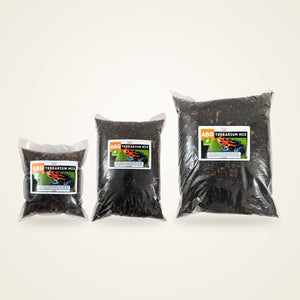
- Jurassic ABG Terrarium Mix10 cm
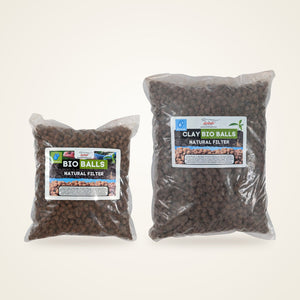
- Drainage – clay bio balls3 cm
Burrowing amphibians need soft, moist soil they can dig into – keep it damp, never waterlogged, and provide a shallow water dish.
Temperature: 16–22°C, keep cool. Humidity: 70–90%. UVB: Not needed.
What does a anderson's crocodile newt eat?
Carnivore – earthworms, crickets, roaches. Feed adults every 2–3 days.
Handling, temperament & health
Hands-off; sharp rib tips and toxic skin.
Health watch: Overheating and Bsal risk.
Cleaning & maintenance schedule
Daily
- Check temperature (many salamanders need it cool) and keep the water dish clean.
Weekly
- Feed; remove uneaten food.
- Moisten soil if the surface dries; check the drainage layer.
Monthly
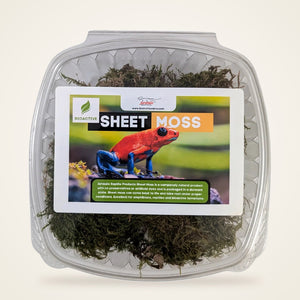
- Top up leaf litter; check crew numbers.
Yearly
- Refresh the top of the soil.
Recommended for a anderson's crocodile newt bioactive
Quantities are for one minimum-size enclosure (45 × 30 × 30 cm).

Anderson's crocodile newt FAQ
Is the anderson's crocodile newt good for beginners?
No – the anderson's crocodile newt is a specialist animal for expert keepers only. Hands-off; sharp rib tips and toxic skin.
What size enclosure does a anderson's crocodile newt need?
At least 45 × 30 × 30 cm (about 18 × 12 × 12 inches, roughly 11 US gallons) for one adult. Up to 2 can share; add about 50% more floor space for each extra animal.
How much does a anderson's crocodile newt cost in Canada?
Typically $300–600 CAD to buy, about $270–500 CAD for a complete bioactive enclosure, and $100–200 CAD a year to keep.
What temperature and humidity does a anderson's crocodile newt need?
Temperature: 16–22°C, keep cool. Humidity: 70–90%.
What does a anderson's crocodile newt eat?
Carnivore – earthworms, crickets, roaches. Feed adults every 2–3 days.
Similar species
This care sheet is general guidance from One Bioactive, not veterinary advice. Needs vary with age, locality and individual animals – confirm with your breeder and an exotics vet. Prices are typical Canadian ranges in CAD and change over time.