

Amphibian · Tree frog
Hourglass tree frog care guide
Dendropsophus ebraccatus
The hourglass tree frog is a intermediate-level tree frog from Southern Mexico to Ecuador. Adults reach 2.5–3.5 cm and live 3–5 years in captivity. Small, pretty tree frog for planted vivariums; small groups.
- Enclosure 30 × 30 × 45 cm
- Temp 22–27°C
- Humidity 70–90%
How much does a hourglass tree frog cost in Canada?
Hourglass tree frog quick facts
- Skill level
- Intermediate
- Adult size
- 2.5–3.5 cm
- Lifespan
- 3–5 years
- Activity
- Nocturnal
- Native range
- Southern Mexico to Ecuador
- Minimum enclosure
- 30 × 30 × 45 cm (12 × 12 × 18 in, ≈ 11 US gal)
- Housing
- Up to 4 can share; add about 30% more floor space for each extra animal.
- Temperature
- 22–27°C
- Humidity
- 70–90%
- UVB
- Recommended
- Diet
- Insectivore – fruit flies (hydei), small crickets
- Bioactive style
- Tropical arboreal
Hourglass tree frog enclosure & bioactive setup
Give one adult at least 30 × 30 × 45 cm (12 × 12 × 18 inches). Up to 4 can share; add about 30% more floor space for each extra animal. This species suits a tropical arboreal bioactive build.
- Leaf litter2 cm
- Jurassic ABG Terrarium Mix8 cm
- Drainage – clay bio balls4 cm
Most of the action is vertical – keep the soil moist but not wet, and focus on perches and dense planting.
Temperature: 22–27°C. Humidity: 70–90%. UVB: Recommended.
What does a hourglass tree frog eat?
Insectivore – fruit flies (hydei), small crickets. Feed dusted small insects every 1–2 days.
Handling, temperament & health
Tiny and jumpy; hands-off.
Health watch: Dehydration and stress.
Cleaning & maintenance schedule
Daily
- Mist to raise humidity – usually a heavy evening misting with a dry-down by day.
- Check temperatures at perch height.
Weekly
- Feed; remove uneaten food (and diet dishes after 24–48 h).
- Check the drainage layer and prune vines.
- Look for stuck shed on toes and tails.
Monthly
- Top up leaf litter.
- Check branches and mounts are still secure.
- Clean glass, vents and misting nozzles.
Yearly
- Refresh the top of the soil in open areas.
- Replace UVB bulbs (if used) on schedule.
Recommended for a hourglass tree frog bioactive
Quantities are for one minimum-size enclosure (30 × 30 × 45 cm).
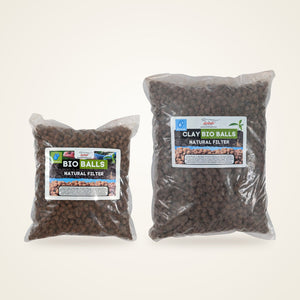 Clay Bio Balls
Drainage layer, 4 cm
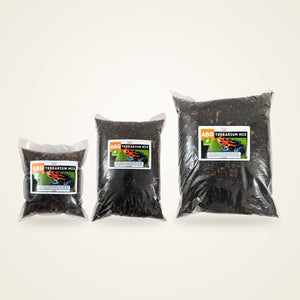 Jurassic ABG Terrarium Mix
Bioactive soil layer, 8 cm
 Magnolia Leaves 10/Pack
Leaf litter – food and cover for the clean-up crew
 Fresh Sphagnum Moss Container
Moss for humidity pockets and planting
 Cork Bark Backgrounds
Turns the back wall into climbing space
 Cork Bark Tubes
A “tree trunk” to climb and hide in
 Yamuna Spiderwood
Arboreal species prefer diagonal and horizontal perches
 Cork Branches
More climbing routes
Hourglass tree frog FAQ
Is the hourglass tree frog good for beginners?
The hourglass tree frog is best for keepers with some experience (intermediate). Tiny and jumpy; hands-off.
What size enclosure does a hourglass tree frog need?
At least 30 × 30 × 45 cm (about 12 × 12 × 18 inches, roughly 11 US gallons) for one adult. Up to 4 can share; add about 30% more floor space for each extra animal.
How much does a hourglass tree frog cost in Canada?
Typically $40–80 CAD to buy, about $310–550 CAD for a complete bioactive enclosure, and $100–200 CAD a year to keep.
What temperature and humidity does a hourglass tree frog need?
Temperature: 22–27°C. Humidity: 70–90%.
What does a hourglass tree frog eat?
Insectivore – fruit flies (hydei), small crickets. Feed dusted small insects every 1–2 days.
Similar species
This care sheet is general guidance from One Bioactive, not veterinary advice. Needs vary with age, locality and individual animals – confirm with your breeder and an exotics vet. Prices are typical Canadian ranges in CAD and change over time.