

Invertebrate · Millipede
Olive millipede care guide
Telodeinopus aoutii
The olive millipede is a beginner-level millipede from West Africa (Ghana, Ivory Coast). Adults reach Body 12–15 cm and live 5–7 years in captivity. Active, fast-breeding millipede sometimes sold as the Ghana speed millipede.
- Enclosure 30 × 20 × 20 cm
- Temp 22–28°C
- Humidity 70–85%
How much does a olive millipede cost in Canada?
Olive millipede quick facts
- Skill level
- Beginner
- Adult size
- Body 12–15 cm
- Lifespan
- 5–7 years
- Activity
- Nocturnal
- Native range
- West Africa (Ghana, Ivory Coast)
- Minimum enclosure
- 30 × 20 × 20 cm (12 × 8 × 8 in, ≈ 3 US gal)
- Housing
- Up to 8 can share; add about 15% more floor space for each extra animal.
- Temperature
- 22–28°C
- Humidity
- 70–85%
- UVB
- Not needed
- Diet
- Detritivore – rotting wood, leaf litter, fruit, vegetables
- Bioactive style
- Invertebrate colony
Olive millipede enclosure & bioactive setup
Give one adult at least 30 × 20 × 20 cm (12 × 8 × 8 inches). Up to 8 can share; add about 15% more floor space for each extra animal. This species suits a invertebrate colony bioactive build.
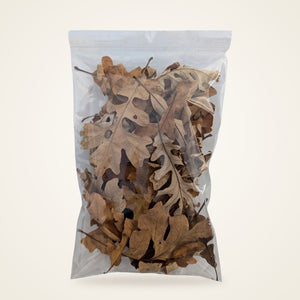
- Leaf litter2 cm
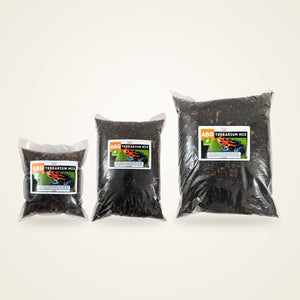
- Jurassic ABG Terrarium Mix12 cm
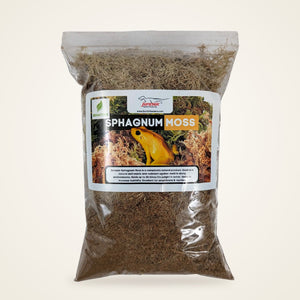
Leaf litter is food here, not decoration – keep a thick layer topped up. Keep one side damper than the other.
Temperature: 22–28°C. Humidity: 70–85%. UVB: Not needed.
What does a olive millipede eat?
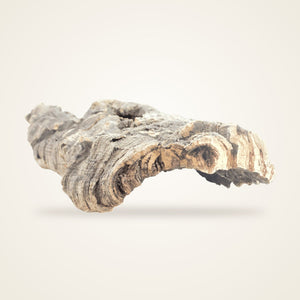
Detritivore – rotting wood, leaf litter, fruit, vegetables. Keep leaf litter and rotting wood available and offer produce and calcium weekly.
Handling, temperament & health
Fast-moving but harmless; wash hands after handling.
Health watch: Mites on uneaten food; remove leftovers.
Cleaning & maintenance schedule
Daily
- Nothing needed most days.
Weekly
- Mist the damp side; add vegetables or protein food in small amounts and remove leftovers after 24–48 h.
Monthly
- Top up leaf litter and add a calcium source (cuttlebone).
- Thin out the colony or split it if it gets crowded.
Yearly
- Replace about a third of the soil, which turns into frass over time.
Recommended for a olive millipede bioactive
Quantities are for one minimum-size enclosure (30 × 20 × 20 cm).
Olive millipede FAQ
Is the olive millipede good for beginners?
Yes – the olive millipede is a good choice for beginners. Fast-moving but harmless; wash hands after handling.
What size enclosure does a olive millipede need?
At least 30 × 20 × 20 cm (about 12 × 8 × 8 inches, roughly 3 US gallons) for one adult. Up to 8 can share; add about 15% more floor space for each extra animal.
How much does a olive millipede cost in Canada?
Typically $15–35 CAD to buy, about $120–220 CAD for a complete bioactive enclosure, and $20–40 CAD a year to keep.
What temperature and humidity does a olive millipede need?
Temperature: 22–28°C. Humidity: 70–85%.
What does a olive millipede eat?
Detritivore – rotting wood, leaf litter, fruit, vegetables. Keep leaf litter and rotting wood available and offer produce and calcium weekly.
Similar species
This care sheet is general guidance from One Bioactive, not veterinary advice. Needs vary with age, locality and individual animals – confirm with your breeder and an exotics vet. Prices are typical Canadian ranges in CAD and change over time.