

Amphibian · Tree frog
White-lipped tree frog care guide
Nyctimystes infrafrenatus
The white-lipped tree frog is a intermediate-level tree frog from New Guinea, northern Queensland. Adults reach 10–14 cm and live 8–15 years in captivity. The world's largest tree frog: needs a tall, spacious enclosure with screened sides and lots of cover.
- Enclosure 60 × 45 × 75 cm
- Temp 24–29°C
- Humidity 60–80%
How much does a white-lipped tree frog cost in Canada?
White-lipped tree frog quick facts
- Skill level
- Intermediate
- Adult size
- 10–14 cm
- Lifespan
- 8–15 years
- Activity
- Nocturnal
- Native range
- New Guinea, northern Queensland
- Minimum enclosure
- 60 × 45 × 75 cm (24 × 18 × 30 in, ≈ 54 US gal)
- Housing
- Up to 2 can share; add about 50% more floor space for each extra animal.
- Temperature
- 24–29°C
- Humidity
- 60–80%
- UVB
- Recommended
- Diet
- Insectivore – crickets, roaches, hornworms
- Bioactive style
- Tropical arboreal
White-lipped tree frog enclosure & bioactive setup
Give one adult at least 60 × 45 × 75 cm (24 × 18 × 30 inches). Up to 2 can share; add about 50% more floor space for each extra animal. This species suits a tropical arboreal bioactive build.
- Leaf litter2 cm
- Jurassic ABG Terrarium Mix8 cm
- Drainage – clay bio balls5 cm
Most of the action is vertical – keep the soil moist but not wet, and focus on perches and dense planting.
Temperature: 24–29°C. Humidity: 60–80%. UVB: Recommended.
What does a white-lipped tree frog eat?
Insectivore – crickets, roaches, hornworms. Feed adults dusted insects 2–3 times a week.
Handling, temperament & health
Jumpy and nervous; minimal handling.
Health watch: Skin infections, obesity and nose injuries from jumping into glass.
Cleaning & maintenance schedule
Daily
- Mist to raise humidity – usually a heavy evening misting with a dry-down by day.
- Check temperatures at perch height.
Weekly
- Feed; remove uneaten food (and diet dishes after 24–48 h).
- Check the drainage layer and prune vines.
- Look for stuck shed on toes and tails.
Monthly
- Top up leaf litter.
- Check branches and mounts are still secure.
- Clean glass, vents and misting nozzles.
Yearly
- Refresh the top of the soil in open areas.
- Replace UVB bulbs (if used) on schedule.
Recommended for a white-lipped tree frog bioactive
Quantities are for one minimum-size enclosure (60 × 45 × 75 cm).
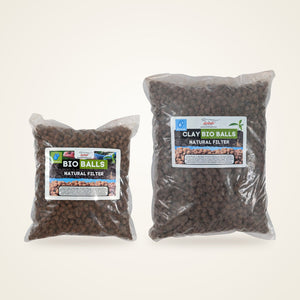 Clay Bio Balls
Drainage layer, 5 cm
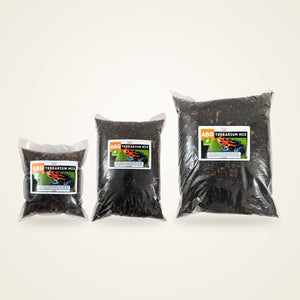 Jurassic ABG Terrarium Mix
Bioactive soil layer, 8 cm
 Magnolia Leaves 10/Pack
Leaf litter – food and cover for the clean-up crew
 Fresh Sphagnum Moss Container
Moss for humidity pockets and planting
 Cork Bark Backgrounds
Turns the back wall into climbing space
 Cork Bark Tubes
A “tree trunk” to climb and hide in
 Yamuna Spiderwood
Arboreal species prefer diagonal and horizontal perches
 Cork Branches
More climbing routes
White-lipped tree frog FAQ
Is the white-lipped tree frog good for beginners?
The white-lipped tree frog is best for keepers with some experience (intermediate). Jumpy and nervous; minimal handling.
What size enclosure does a white-lipped tree frog need?
At least 60 × 45 × 75 cm (about 24 × 18 × 30 inches, roughly 54 US gallons) for one adult. Up to 2 can share; add about 50% more floor space for each extra animal.
How much does a white-lipped tree frog cost in Canada?
Typically $100–200 CAD to buy, about $620–1050 CAD for a complete bioactive enclosure, and $150–300 CAD a year to keep.
What temperature and humidity does a white-lipped tree frog need?
Temperature: 24–29°C. Humidity: 60–80%.
What does a white-lipped tree frog eat?
Insectivore – crickets, roaches, hornworms. Feed adults dusted insects 2–3 times a week.
Similar species
This care sheet is general guidance from One Bioactive, not veterinary advice. Needs vary with age, locality and individual animals – confirm with your breeder and an exotics vet. Prices are typical Canadian ranges in CAD and change over time.