

Reptile · Monitor
Nile monitor care guide
Varanus niloticus
The nile monitor is a expert-level monitor from Sub-Saharan Africa. Adults reach 150–200 cm and live 15–20 years in captivity. Room-sized enclosure with a pool; rarely tames.
- Enclosure 360 × 180 × 180 cm
- Temp Basking 50°C+, ambient 28°C
- Humidity 60–80%
How much does a nile monitor cost in Canada?
Nile monitor quick facts
- Skill level
- Expert
- Adult size
- 150–200 cm
- Lifespan
- 15–20 years
- Activity
- Diurnal
- Native range
- Sub-Saharan Africa
- Minimum enclosure
- 360 × 180 × 180 cm (142 × 71 × 71 in, ≈ 3082 US gal)
- Housing
- Best kept alone.
- Temperature
- Basking 50°C+, ambient 28°C
- Humidity
- 60–80%
- UVB
- Required
- Diet
- Carnivore – fish, crayfish, whole prey, eggs
- Bioactive style
- Semi-aquatic (paludarium)
Nile monitor enclosure & bioactive setup
Give one adult at least 360 × 180 × 180 cm (142 × 71 × 71 inches). Best kept alone. This species suits a semi-aquatic (paludarium) bioactive build.
- Leaf litter2 cm
- Jurassic ABG Terrarium Mix12 cm
- Base layer – packed coco fibre18 cm
- Drainage – clay bio balls4 cm
Quantities assume about half the floor is land. The water half needs a filter and regular partial water changes. This species digs, so give it 30 cm (12 in) of substrate in total. Only the top 12 cm needs to be bioactive soil; the 18 cm underneath can be cheaper coco fibre, dampened and packed firm.
Temperature: Basking 50°C+, ambient 28°C. Humidity: 60–80%. UVB: Required.
Some Canadian provinces and many municipalities restrict or ban this species. Check your local bylaws and any provincial permit rules before buying.
What does a nile monitor eat?
Carnivore – fish, crayfish, whole prey, eggs. Juveniles daily, adults 2–3 times a week.
Handling, temperament & health
Very defensive and fast; experts only.
Health watch: Obesity and injuries.
Cleaning & maintenance schedule
Daily
- Check water and air temperature; feed according to species.
Weekly
- Change 20–30% of the water with dechlorinated water.
- Rinse filter sponge in old tank water (never tap water) as needed.
Monthly
- Top up leaf litter on land; prune plants at the waterline.
Yearly
- Service the pump/filter fully.
Recommended for a nile monitor bioactive
Quantities are for one minimum-size enclosure (360 × 180 × 180 cm).
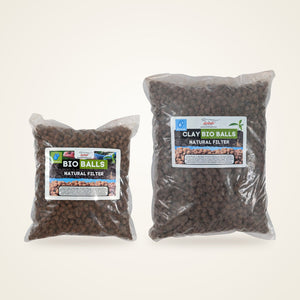 Clay Bio Balls
Drainage layer, 4 cm
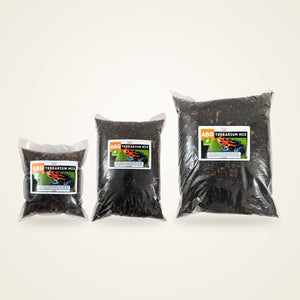 Jurassic ABG Terrarium Mix
Bioactive top layer, 12 cm
 Premium Coconut Fiber
Base layer, 18 cm – dampen and pack firm so burrows hold
 Almond Leaves Dried 15/Pack
Leaf litter – food and cover for the clean-up crew
 Fresh Sphagnum Moss Container
Moss for humidity pockets and planting
 Malaysian Drift Wood
Bridges water and land; easy exit from the water
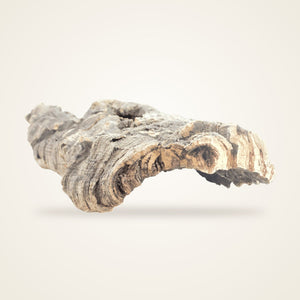 Cork Bark Flats
Shelter on the land section
Nile monitor FAQ
Is the nile monitor good for beginners?
No – the nile monitor is a specialist animal for expert keepers only. Very defensive and fast; experts only.
What size enclosure does a nile monitor need?
At least 360 × 180 × 180 cm (about 142 × 71 × 71 inches, roughly 3082 US gallons) for one adult. Best kept alone.
How much does a nile monitor cost in Canada?
Typically $80–250 CAD to buy, about $12390–22460 CAD for a complete bioactive enclosure, and $1200–2500 CAD a year to keep.
What temperature and humidity does a nile monitor need?
Temperature: Basking 50°C+, ambient 28°C. Humidity: 60–80%.
What does a nile monitor eat?
Carnivore – fish, crayfish, whole prey, eggs. Juveniles daily, adults 2–3 times a week.
Similar species
This care sheet is general guidance from One Bioactive, not veterinary advice. Needs vary with age, locality and individual animals – confirm with your breeder and an exotics vet. Prices are typical Canadian ranges in CAD and change over time.